Multilingual websites. English, Hebrew, Russian & more, written natively
For businesses whose customers speak more than one language: a website in English, Hebrew, Russian or other languages, each written natively, with right-to-left Hebrew and search set up per language.
A multilingual website gives each language its own version, written for the people who read it: its own address, its own page titles and search terms, and, for Hebrew, a proper right-to-left layout. Goldren Studio in Miami builds websites in English, Hebrew and Russian and plans other languages the same way. Each version is linked with hreflang so Google shows the right one, and forms, emails and WhatsApp messages follow the visitor’s language. You can talk to Daniel in any of these languages.
Our commitments
- Scope and price in writing before we start
- Everything in your name
- A reply within one business day
- No long lock-in
- A handover document at the end
For a business serving more than one community, and a company entering a new market.
A small business
You serve an Israeli or Russian-speaking community in the US, and English-speaking customers too. Your customers should read about you in the language they think in, and find you when they search in it. We build a site that does both without doubling your work: a shared structure, separate words.
An established company
You’re entering the US from Israel or another country, or you serve several markets at once. You need legal pages per language, editors for each version, brand terms kept consistent and search planned market by market. We set up the structure, the workflow and a glossary, and write or coordinate each language.
Each language done properly, not just switched on.
A language plan
Which pages exist in which language, what’s shared, and what each audience needs to read. Not every page has to exist in every language, as long as each version is complete and honest for its reader.
Copy written natively
Each language is written for its reader, not translated line by line. American customers expect a different order, tone and proof than Israeli or Russian-speaking ones, and the copy reflects that while the facts stay identical.
Right-to-left Hebrew
The Hebrew version is mirrored the way a native Hebrew site should be: menus, arrows, forms and reading order, with English names, emails and phone numbers kept readable inside Hebrew sentences. Fonts cover Hebrew and Cyrillic properly.
Search set up per language
Each language has its own address, page titles, descriptions and keywords, researched in that language, because people search differently in each. Hreflang, the sitemap and the language declared on every page tell Google which version to show.
Forms and messages in the right language
Form labels, error messages, confirmation emails, WhatsApp opening lines and even the AI assistant follow the visitor’s language, so the conversation doesn’t switch languages halfway through.
Policies per language
Privacy, terms and cookie pages are adapted for each language version from texts your lawyer approves, so a reader never lands on a policy in a language they don’t read.
Editing and testing per language
Your team can edit each language separately. Every version is tested on real phones before launch, including right-to-left layouts and longer Russian words.
One structure, a separate voice for each language.
-
Step 01
A first conversation
In English, Hebrew or Russian, whichever you prefer. You tell Daniel who your customers are, which languages they read and which pages matter most to each group.
-
Step 02
Scope and price in writing
The proposal sets out the languages, the pages in each, who writes the copy and the price. Nothing starts until you agree.
-
Step 03
Review points per language
Each language is reviewed on its own, by you or the native speakers on your team, at points agreed in advance. For languages Daniel doesn’t write himself, he brings in a native writer and stays responsible for the result.
-
Step 04
Launch, handover and support
All versions go live with their search settings checked. You get a handover document for editing each language, then a monthly care plan or help on demand.
What shapes the price.
A second language is not simply double the work, and not simply a translation fee. The main factors:
- Languages and pages: How many languages, and how many pages exist in each.
- Who writes the copy: Written by us, adapted from your texts, or supplied by your own native writers.
- Right-to-left layout: Hebrew, like other right-to-left languages, needs a mirrored layout and extra testing.
- Integrations: Forms, emails, booking, a store or an assistant that must work in every language.
- How often content changes: A site that changes every week needs a workflow for keeping every language up to date.
After a short conversation you get the scope and the price in writing, before any work starts. What isn’t in the proposal won’t show up on the invoice.
From our work.
You’re reading one.
This website exists in English, Hebrew and Russian. Each language has its own address, each version was written separately rather than machine-translated, and the Hebrew version runs right to left. The links below open this same page in the other languages.
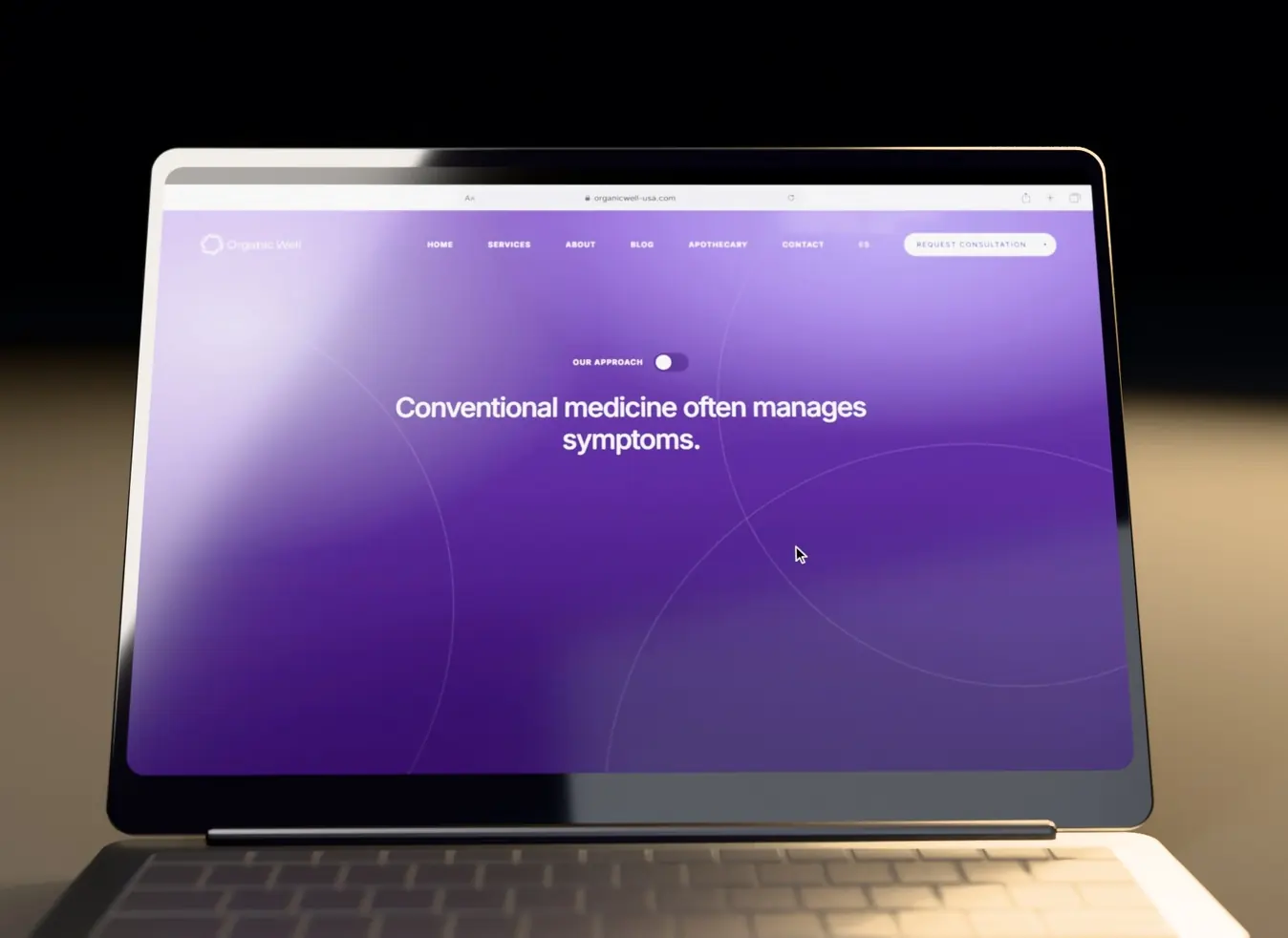
Organic Well’s clinic website, built by Goldren Studio, runs in English and Spanish, so patients can read about the clinic’s services and physicians in their own language before asking for a consultation.
FAQ.
Multilingual websites
It’s useful for a first draft, but on its own it misses tone, industry terms and the words people actually search for, and readers notice. We write or edit each language natively, so it reads as if the business had always spoken that language.
Each language has its own address, the language is declared on every page, and hreflang links connect the versions of each page. Google then shows the Hebrew version to people searching in Hebrew and the English one to people searching in English.
No. The language plan decides which pages each audience needs. A shorter Hebrew or Russian version is fine, as long as it’s complete and honest for its reader and never promises what the other version doesn’t.
Daniel writes and works in English, Hebrew and Russian. Other languages, such as Spanish, are planned the same way, with a native writer brought in for the copy and Daniel responsible for the result.
There’s no fixed price list. It depends on the languages, the pages in each, who writes the copy and the integrations. After a short conversation you get the scope and the price in writing, and nothing starts until you agree.
The timeline is agreed in writing before we start. The biggest factor is the copy: how much there is, in how many languages, and how quickly each version is reviewed.
You do. The domain, the site, its code and every language version of the text are in your name. You can edit them yourselves or hand them to anyone you like.
You can keep every language up to date yourselves, choose a monthly care plan, or ask for help when you need it, with no long lock-in. Whenever you write, in English, Hebrew or Russian, Daniel replies within one business day.
I write each language for the person reading it, because a customer who has to translate your website in their head is already halfway out the door.
© 2026 Goldren Studio
Let’s talk.
Tell us about your project — a website, a store or a tool for your team.
Direct access.
Speak directly with Daniel. Meet in Miami by appointment. Work with us remotely from anywhere.
Clear next steps.
After a short call you get a written proposal with the scope and the price, and nothing starts until you agree. Your message goes straight to Daniel, who replies within one business day.